Ashbringer emblem Ashbringer

The Legend

The Legend of Ashbringer

A tale of Light, betrayal, sacrifice, and redemption.

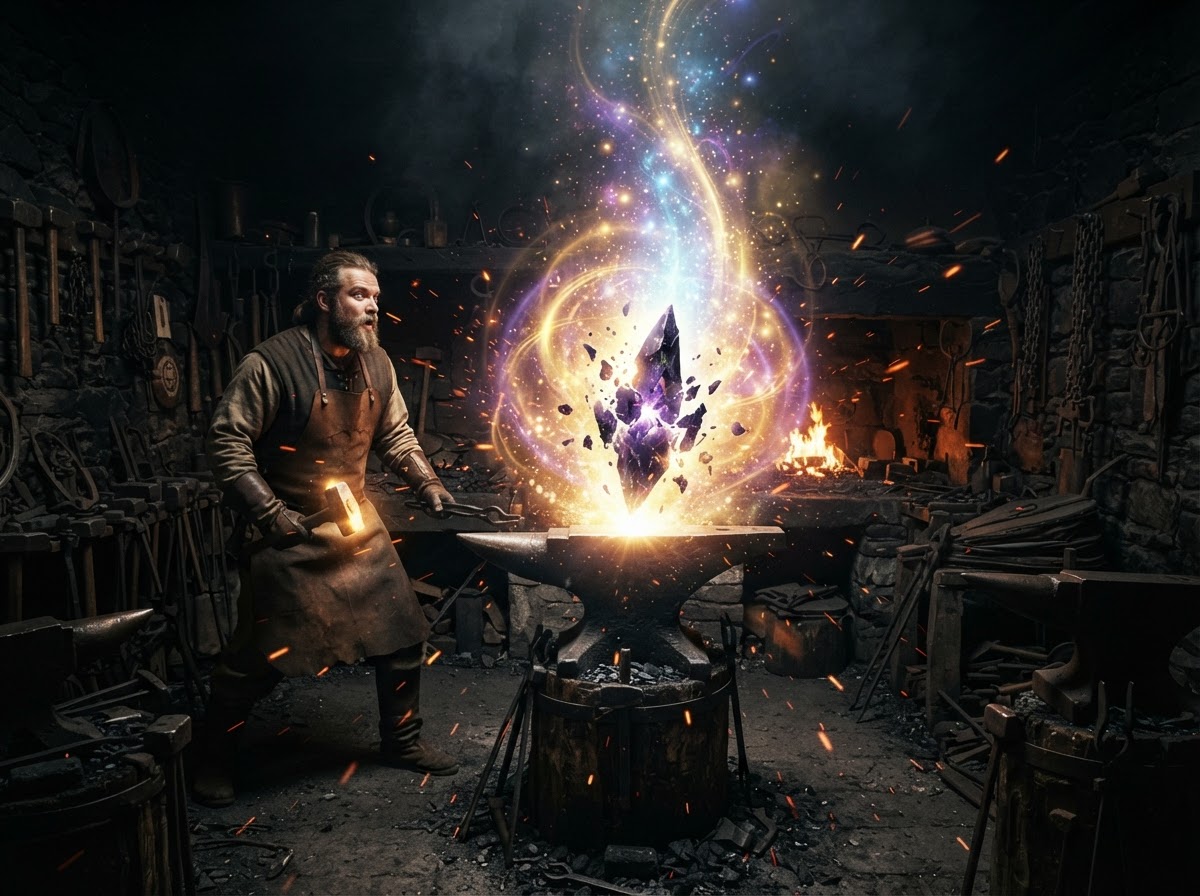
The Ashbringer being forged in a magical forge with holy light

Chapter I

The Birth of Ashbringer

Long before the sword became a legend, Highlord Alexandros Mograine discovered a mysterious dark crystal during the Second War—a relic of unknown origin, pulsing with an otherworldly energy. He safeguarded this artifact, understanding that its true purpose had yet to be revealed.

Years passed. The undead Scourge rose like a tide of darkness, consuming the once-proud kingdom of Lordaeron. The living world trembled beneath the weight of death's advance. In this darkest hour, Alexandros recognized that the moment had finally come. He presented the dark crystal to his fellow paladins, warriors of the Holy Light who had sworn to stand against the encroaching corruption.

Together, they attempted to destroy the crystal using the combined power of the Holy Light. But the crystal did not break—it transformed. The holy magic of the paladins, poured into its depths, did not shatter the darkness within. Instead, their Light was absorbed, and the crystal blazed with radiant energy, now brilliant and pure, glowing with the celestial fire of the divine.

Mograine brought the transformed crystal to Ironforge, where King Magni Bronzebeard, the great dwarven king, beheld its power. With hands skilled in the ancient forge-craft of his people, Magni took the glowing crystal and brought it to the sacred fires of the deepest forges. He poured his grief—raw and unrelenting—into every strike of his hammer. His brother Muradin had seemingly fallen to the frozen reaches of Northrend, and into the blade went Magni's anguish, his determination, his refusal to accept that darkness would have the final word.

From the flames emerged a magnificent two-handed sword, its blade glowing with holy radiance. Where it passed through the darkness, undead fell to ash. The weapon was named Ashbringer—a legend forged in fire and shaped by Light. It would become the symbol of humanity's defiant stand against oblivion itself.
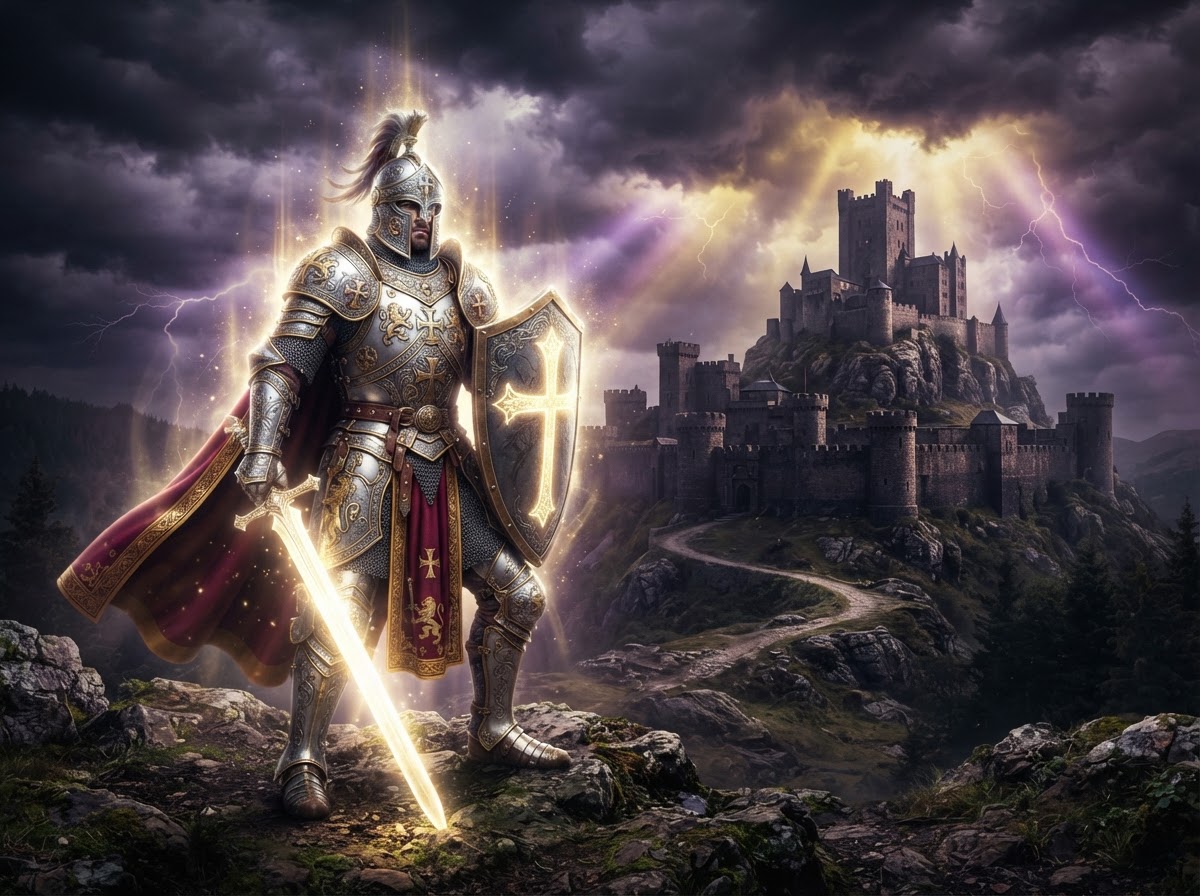
A paladin warrior in shining armor wielding the holy Ashbringer sword

Chapter II

Alexandros Mograine, The Original Ashbringer

In the twilight years of Lordaeron, as the undead Scourge consumed kingdom after kingdom, one name rang out across the battlefields like a clarion call: Alexandros Mograine. Armed with Ashbringer, he became more than a warrior—he became an embodiment of hope itself.

Mograine led campaign after campaign against the spreading darkness. Where the undead marched, he stood against them. Where survivors cowered in despair, he brought the Light. The legendary blade sang in his hands, reducing skeletal warriors and corrupted mages to ash. With each victory, his legend grew, and with it, so did the faith of those who believed the Scourge could be resisted.

He became known by the same title as his weapon: the Ashbringer. The title carried profound weight. It was not given lightly—it was earned through sacrifice, through countless battles, through an unwavering commitment to the protection of the innocent and the pursuit of justice against darkness.

Mograine's importance to the Silver Hand—the sacred order of paladins dedicated to the Holy Light—cannot be overstated. He was both warrior and beacon, a living reminder that even in the face of overwhelming odds, the Light could endure. His presence on the battlefield bolstered the courage of others. His faith was unshakeable.

Yet his very success attracted enemies who feared his power. There were those who saw in Alexandros Mograine a threat to their designs. Whispers of conspiracy began to circulate in the shadowed corridors of power. Renault, his own eldest son, would become the instrument of his undoing—but this darkness was yet to unfold.

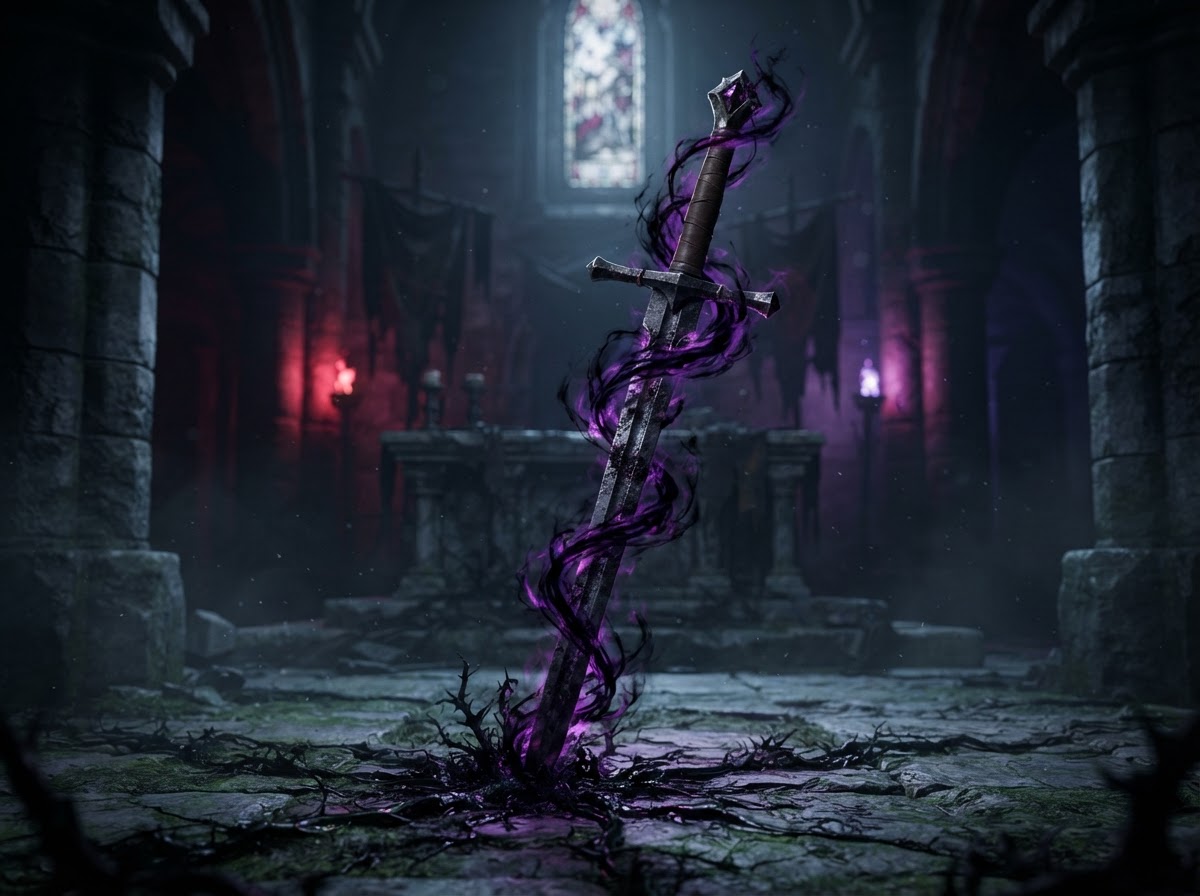
A corrupted sword wreathed in dark purple and black energy

Chapter III

The Betrayal and Corruption

Ambition is a poison that flows slowly through the veins. Alexandros's eldest son, Renault Mograine, harbored wounds that would fester into something far darker than betrayal—they would transform into an act of cosmic treachery.

Renault felt overshadowed by his father's legend. Where Alexandros carried the Light, Renault felt only cold shadow. Whispers reached his ears—promises of power, of recognition, of a path where he would not live in his father's shadow. Those who made these whispers knew exactly what they were doing. They understood that the greatest sword could be shattered from within if the wielder's heart could be turned.

During a fateful ambush in the haunted streets of Stratholme, Renault struck. He murdered his own father—not with a coward's dagger, but with Ashbringer itself. The holy blade, the symbol of humanity's hope, became the instrument of the Ashbringer's doom. The betrayal was complete and devastating.

But the horror did not end with Alexandros's death. The terrible corruption of that act—a son murdering his father, Light turned to darkness, hope shattered by betrayal—corrupted the legendary weapon itself. Ashbringer, once radiant with holy fire, began to darken. The sword that had burned away undead now seemed to embrace the very shadow it once opposed.

Alexandros was not allowed to rest in peace. The Lich King, master of undeath, seized upon the moment of weakness. Alexandros's corpse was resurrected as a death knight—one of the Four Horsemen of Naxxramas, twisted into an instrument of darkness. The champion of Light became a harbinger of shadow. And Ashbringer, the symbol of hope, became associated with corruption and ruin.

The blade that had reduced undead to ash now served the Undead. The weapon forged to protect the innocent now defended darkness itself. It was not merely a defeat—it was a perversion of everything the sword had ever meant.

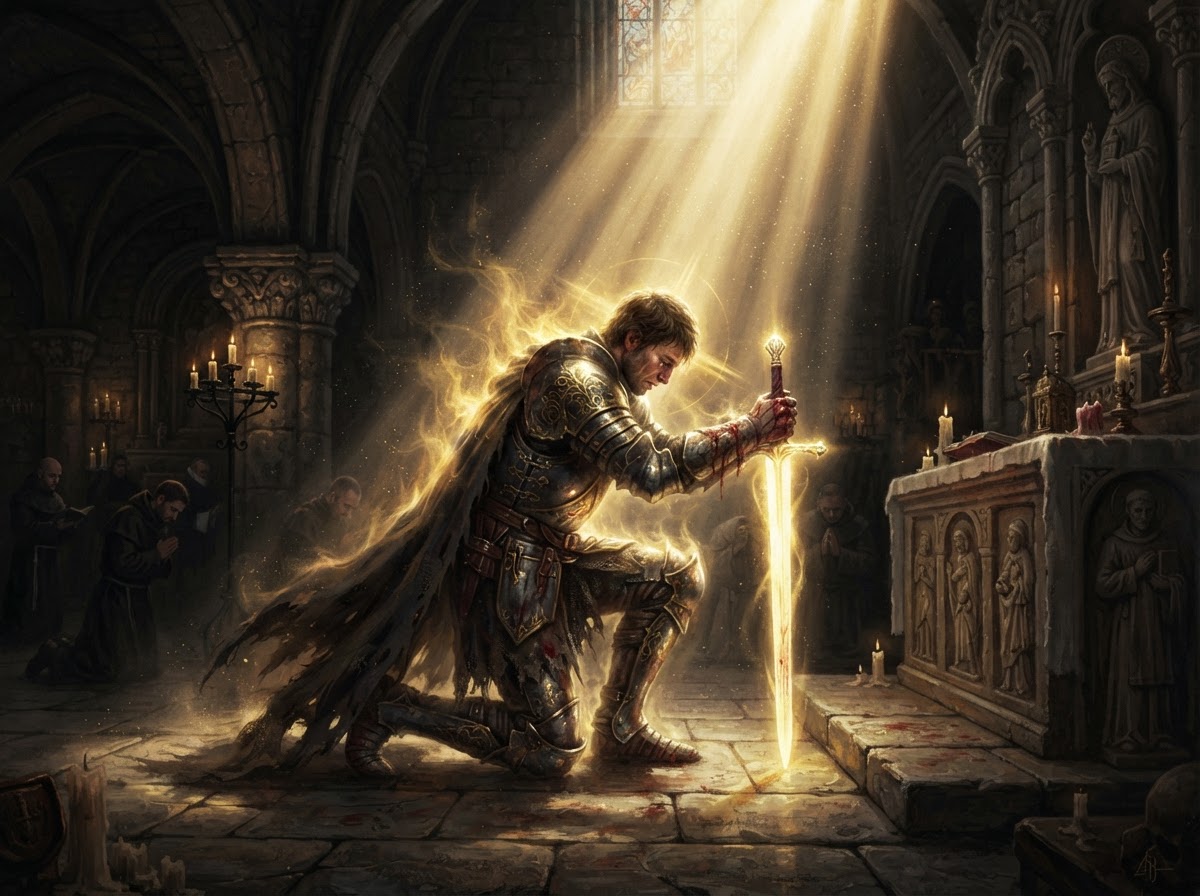
A figure in armor surrendering in sacrifice, surrounded by holy and shadow energy

Chapter IV

Darion Mograine's Sacrifice

Not all of the Mograine line had been corrupted by darkness. Darion Mograine, younger son of Alexandros, carried a burden that few could comprehend: the weight of his father's fall and his brother's treachery. While Renault embraced the shadow, Darion refused to surrender his father's legacy to darkness.

Darion sought desperately for a way to free his father's soul from the chains of undeath. He knew that Alexandros was still there, trapped within the corrupted form, a consciousness imprisoned in a body no longer his own. The thought drove Darion to search far and wide for any solution, any ritual, any power that could break the Lich King's hold.

His quest led him to Light's Hope Chapel, a sacred sanctuary where the Holy Light still burned bright against the encroaching darkness. It was here that Darion would make his choice.

During the First Battle for Light's Hope Chapel, as the undead forces pressed their assault upon the last great bastion of the Light, Darion made a decision that would echo through eternity. He recovered the corrupted Ashbringer from his father's undead grasp. And then, in an act of supreme sacrifice and love, Darion plunged the legendary sword directly into his own chest.

It was not suicide—it was redemption. His sacrifice broke the chains that bound his father's soul. In that moment of pure selflessness, the Light burned bright enough to free Alexandros from the Lich King's grasp. The undead forces were driven back. The battle was won.

But victory came at a terrible cost. Darion did not survive his sacrifice. The Lich King, enraged at the loss of one of his most powerful servants, raised Darion into undeath as well. In trying to save his father, Darion condemned himself to the same torment. Yet in that darkness, a spark of his father's love remained—a thread of hope that would not be severed.

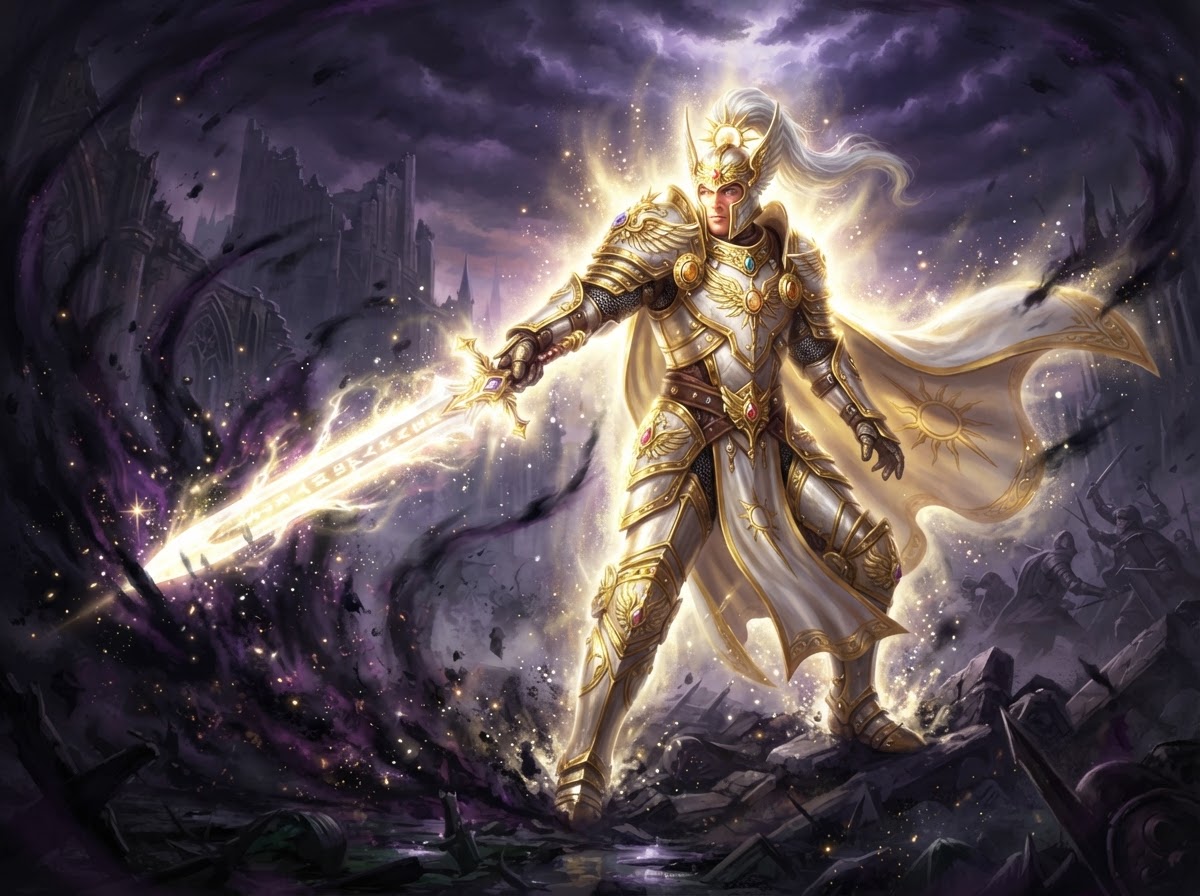
A paladin leader in radiant armor, purifying darkness with holy light

Chapter V

Tirion Fordring and the Restoration of the Light

The story of Ashbringer might have ended in darkness. The blade had been corrupted, wielded by undead, lost to shadow. But the Light does not abandon its champions, even when all seems lost.

During the Second Battle for Light's Hope Chapel, a revelation shattered the foundations of the Lich King's power structure. Darion Mograine, imprisoned in undeath, discovered a terrible truth: the Lich King had betrayed his own servants. The death knights, promised eternal power and glory, were nothing more than slaves—tools to be discarded when no longer useful.

In a moment of defiance that echoed Darion's sacrifice, the death knight turned against his master. Darion broke free from the Lich King's domination and surrendered the corrupted Ashbringer to Tirion Fordring—a legendary paladin whose faith in the Light had never wavered.

Tirion Fordring held the corrupted blade in his hands and did what Alexandros could not do alone—he channeled the full power of the Holy Light through himself and into the weapon. The purification was complete and absolute. The corruption that had clung to Ashbringer for so long burned away like shadow before the dawn. The sword emerged from the flames renewed, radiant once more with divine power.

With Ashbringer restored, Tirion did something unprecedented. He united the fractured remnants of humanity's defenders. The Argent Dawn, a faction of holy warriors dedicated to combating undeath, and the Knights of the Silver Hand, the ancient order of paladins, joined under a single banner: the Argent Crusade. Tirion became their leader, and Ashbringer became the symbol of this unity.

The purified blade would become central to the campaign against the Lich King himself. Ashbringer had not merely been restored—it had been given new purpose. It would be wielded not by a single hero, but by the united will of all who stood against darkness.

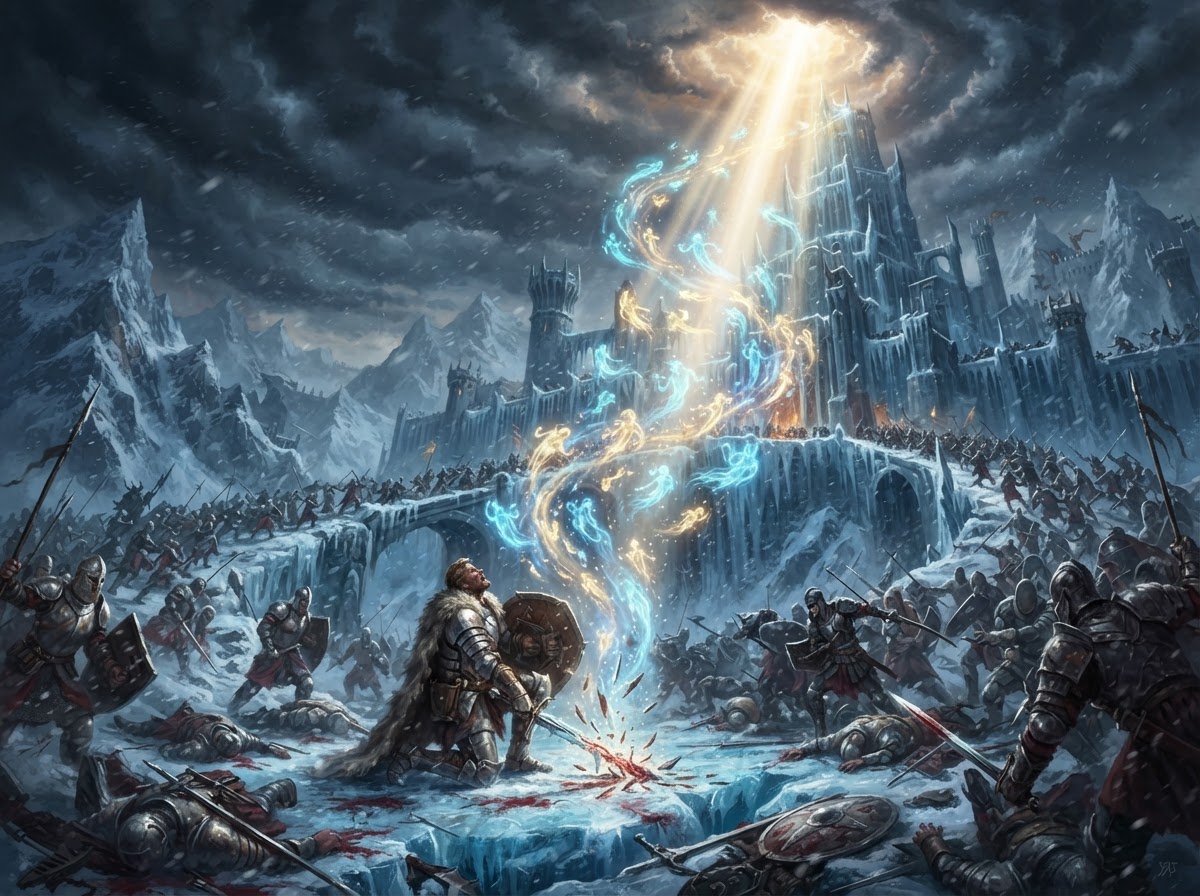
Epic battle at a frozen citadel with divine light overwhelming darkness

Chapter VI

The Fall of the Lich King

Atop the frozen spire of Icecrown Citadel, in the very heart of the Lich King's power, the final confrontation unfolded. The champions of Azeroth—heroes from every faction, every creed, united in common purpose—had ascended to face their ultimate adversary. The sky itself seemed to hold its breath as the armies clashed against the manifestation of undeath incarnate.

For a terrible moment, it seemed that darkness would prevail. The Lich King, commanding the full power of eternal undeath, appeared to have defeated Azeroth's champions. As their fallen bodies lay upon the frozen ground, the Lich King prepared to raise them all—a final, cruel mockery of their sacrifice. They would fight for darkness as slaves eternal.

But Azeroth is not the domain of despair. In that darkest hour, hope itself broke free. Tirion Fordring shattered the icy chains that bound him. With a cry that rang across the frozen wastes, Tirion rose to his feet, Ashbringer held high. The purified blade blazed with holy light as Tirion brought it down upon Frostmourne—the Lich King's own runeblade, the artifact that had carved a path of destruction across Azeroth.

Frostmourne shattered.

The legendary runeblade had imprisoned countless souls—the spirits of those the Lich King had slain or enslaved, bound within the cursed artifact. As it broke, those souls were released. Among them was the spirit of King Terenas Menethil II, once the proud ruler of Lordaeron. Terenas, his love for his people unbroken even by death and torment, used his newfound freedom to resurrect the fallen champions.

Restored to life by the intervention of the divine, the heroes of Azeroth rose once more—not as slaves, but as free warriors. And with Ashbringer leading the charge, they struck down the Lich King himself. For the first time in ages, undeath was vanquished. The tyrant who had sought to rule all of Azeroth in shadow and ice fell to the light.

This was not merely a military victory. It was the triumph of will over despair, of compassion over cruelty, of light over endless shadow. And at the center of that triumph stood Ashbringer—the blade that had fallen to corruption and risen to glory.

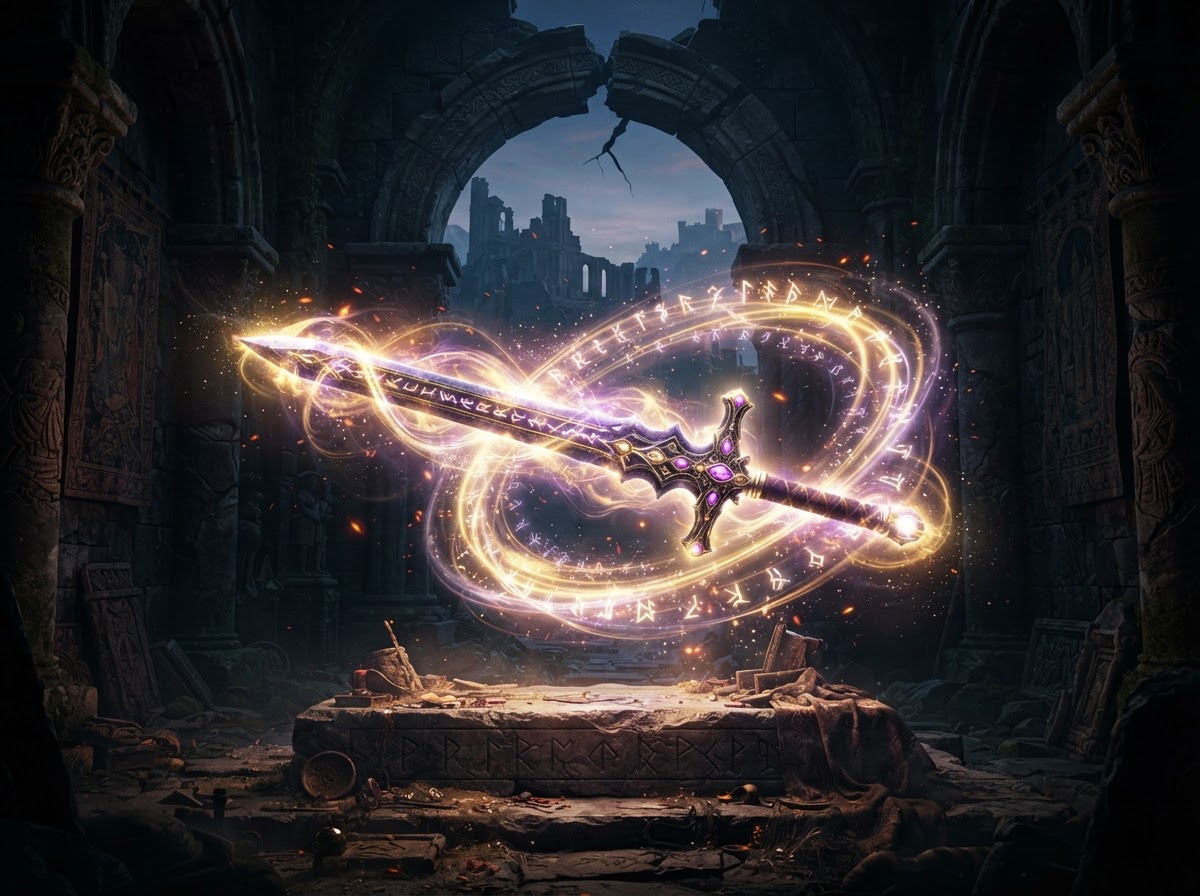
A legendary glowing sword suspended in divine light with ethereal magical energy

Chapter VII

The Legacy of Ashbringer

But the story of Ashbringer did not end with the Lich King's fall. Even as the ice of Northrend began to recede, a new threat was gathering—one even more ancient and terrible than death itself.

The Burning Legion, masters of the Void itself, returned to Azeroth with renewed fury. Where once they had been turned back, now they came with their full might. The war against the Lich King had been merely a prelude; the true test of Azeroth's champions was yet to come.

Ashbringer's role in this new conflict would be transformative. Following Tirion Fordring's death, a new champion of the Light recovered the legendary blade and carried forward the mantle of Highlord of the Silver Hand. During the Legion's third invasion, Retribution paladins—warriors who channeled the fury of the divine into their combat—wielded Ashbringer once more.

The sword became an artifact of immense power, its legend growing with each battle. It was not merely a weapon—it was a symbol of continuity, of the enduring struggle against darkness in all its forms. Those who wielded it carried with them the weight of history: the sacrifice of Alexandros, the redemption of Darion, the purification performed by Tirion.

Yet even legendary artifacts are not eternal. As Sargeras, the dark titan of the Burning Legion, drove his colossal sword through Azeroth itself, causing catastrophic damage, the artifact powers of the greatest weapons were expended to save the world. Ashbringer gave its power—accumulated across centuries of struggle—to help neutralize the destructive force that threatened all existence. The sword was diminished, its artifact power spent, but its sacrifice helped save Azeroth.

Yet in giving its power, Ashbringer confirmed something essential: that true legacy is not measured by the endurance of an object, but by what it represents. The sword was diminished, but what it stood for—hope, sacrifice, redemption, the eternal struggle of light against darkness—could never be truly extinguished.

Multiple armored figures standing together in unity and hope against darkness

Chapter VIII

What Ashbringer Means to Azeroth

To understand Ashbringer is to understand something fundamental about the world of Azeroth itself—about the nature of conflict, sacrifice, and the possibility of redemption.

Hope

Even in humanity's darkest hours, when the Scourge consumed entire kingdoms and death seemed inevitable, Alexandros Mograine demonstrated that the Scourge could be resisted. He carried into every battle the unwavering belief that the Light could prevail. Ashbringer, burning in his hands, was a physical manifestation of that hope—a reminder that despair is not destiny.

Sacrifice

Darion Mograine's act of self-sacrifice—plunging the legendary sword into his own heart to free his father's soul—revealed that true power lies not in domination, but in the willingness to give everything for those we love. Sacrifice transforms the mundane into the sacred. It is the crucible in which legends are forged.

Redemption

Ashbringer fell into corruption when wielded by the Lich King's servants. Yet it was not permanently lost. Through Tirion Fordring's faith and the power of the Holy Light, the sword was purified and restored. What betrayal and darkness had twisted, Light made whole again. Redemption is always possible for those who seek to reclaim their true purpose.

Unity

Ultimately, Ashbringer became the rallying point for the Argent Crusade—a unified force standing against the Lich King. Darion's Knights of the Ebon Blade, once the servants of undeath, stood alongside Tirion's Argent forces. Former enemies joined together against a common darkness. The sword became a symbol not of faction or creed, but of common purpose transcending all divides.

Although Ashbringer's origins lie deeply with the Alliance heroes of Lordaeron—with Alexandros, Darion, Tirion, and the Sacred Light they served—its legacy eventually transcended the boundaries of faction and creed. When darkness threatened all of Azeroth, Ashbringer represented something universal: the choice to resist despair, to sacrifice for others, to believe in the possibility of redemption, and to stand united against the forces that would destroy the world.

The Closing Words

"From darkness, a light was forged.
Through betrayal, its flame endured.
Through sacrifice, its purpose was restored.
And when the world stood upon the edge of oblivion, Ashbringer answered.

Legends are not born from power alone.
They are forged through the courage of those who refuse to surrender."

Lore Sources & Attribution

This page presents a fan-created historical summary of World of Warcraft lore, focusing on the legendary weapon Ashbringer and its role in Azeroth's greatest struggles. The narrative draws from official Warcraft lore and community knowledge.

Disclaimer: World of Warcraft, Ashbringer, and related characters and lore are the intellectual property of Blizzard Entertainment. This independent fan-created page is not affiliated with or endorsed by Blizzard Entertainment. The $ASH cryptocurrency project is independent of Blizzard Entertainment and is not sponsored, supported, or endorsed by Blizzard in any capacity.